What Happens When All 21 Million Bitcoin Are Mined?
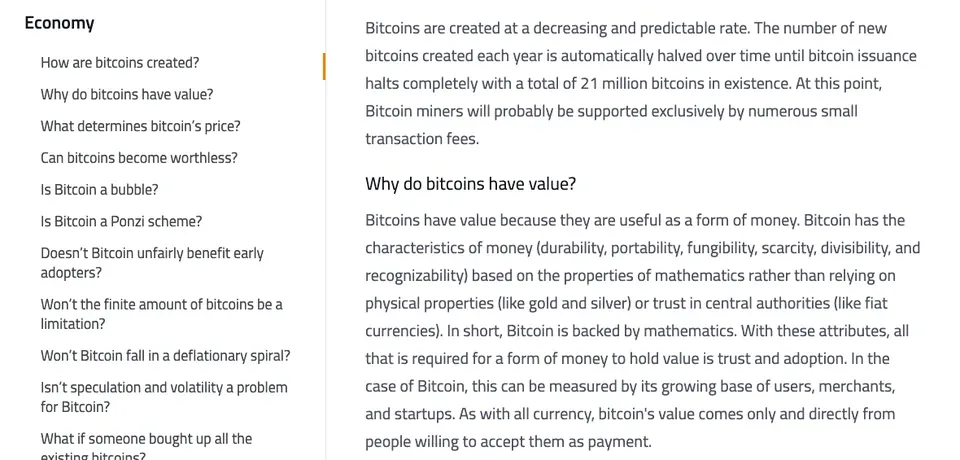
Once all 21 million bitcoin have been issued, no new coins are created, and by design the miners' incentive can move entirely to the transaction fees users pay when they send coins. The bitcoin.org FAQ explains that new bitcoins are issued at a predictable, decreasing rate until the total reaches 21 million, and that at that point “Bitcoin miners will probably be supported exclusively by numerous small transaction fees”. Probably is the operative word there: it describes what the design expects, not a promise.
The “by design” part comes from the incentive section of the Bitcoin whitepaper; its exact sentence is quoted further down, in the section on what happens after the last coin. The bitcoin.org page on mining adds one more point: mining is still required after the last bitcoin is issued.
The two things a miner earns today
A new transaction only counts as confirmed once it is included in a block that carries a proof of work. The more people mine, the more the network automatically raises the difficulty of finding a valid block, so that a block still arrives every 10 minutes on average. A miner who wins a block collects two things: the transaction fees users paid to have their transactions processed faster, and newly issued bitcoin created according to a fixed formula (bitcoin.org FAQ, the entry on how mining works).
The whitepaper counts both as the miner's incentive, but they come from different places:
| Newly issued bitcoin | Transaction fees | |
|---|---|---|
| Where it comes from | The first transaction in every block is a special one that creates new coins, owned by whoever produced the block | When a transaction's outputs add up to less than its inputs, the difference is the fee, added to the incentive of the block that includes it |
| Who pays | The protocol, on a fixed formula; this is how coins were first distributed into circulation | The user sending the transaction |
| After 21 million | Issuance stops completely | Still charged; per the whitepaper, the incentive can then move entirely to fees |
By the whitepaper's definition, the fee is simply what is left when the outputs are subtracted from the inputs: fee = total inputs − total outputs.
Say your wallet holds two amounts you received earlier, 0.0200 BTC and 0.0100 BTC, and you spend both at once, so the inputs total 0.0300 BTC. You pay 0.0250 BTC to the other person and send 0.0048 BTC back to yourself as change, so the outputs total 0.0298 BTC. 0.0300 − 0.0298 = 0.0002 BTC, and that 0.0002 BTC is the fee, which goes to the miner who includes the transaction. The numbers are illustrative and don't match any real transaction.
Where the whitepaper discusses combining and splitting value, it notes that a transaction normally has at most two outputs: one for the payment and one returning change to the sender. Follow the definition above and the consequence is plain: leave out the change output, and the whole difference counts as fee.
Is new issuance cut in half every year?
The bitcoin.org FAQ entry on how bitcoins are created sums up the issuance schedule in one sentence: “The number of new bitcoins created each year is automatically halved over time until bitcoin issuance halts completely with a total of 21 million bitcoins in existence.”
With “each year” sitting so close to “halved”, the sentence is easy to read as a cut every year. That isn't what it says. The only timing it gives is over time, and that answer doesn't go into how often the cut happens. Annual halving is a misreading of it.
How long issuance carries on comes up in passing, in the FAQ entry on what would happen if someone bought up all existing bitcoin: new bitcoins will keep being issued for decades to come. That tells you new coins are still on the way; it doesn't name the year issuance ends.
As issuance slows, where does the supply settle? The FAQ's discussion of deflation answers that: bitcoin tends toward inflation in its early years and becomes stable later on, and the only way the number of coins in circulation goes down is when someone carelessly loses a wallet without a backup.
Is mining still needed after the last bitcoin?
When bitcoin.org explains where the name mining comes from, it compares it with gold mining, because it too is a temporary mechanism for issuing new coins. Unlike gold mining, though, bitcoin mining rewards the service of keeping a secure payment network running. Issuing new coins is only the temporary part of the job, and the same passage ends by saying mining will still be required after the last bitcoin is issued.
As for what pays miners from then on, the Incentive section of the whitepaper reads: “Once a predetermined number of coins have entered circulation, the incentive can transition entirely to transaction fees and be completely inflation free.”
The FAQ puts the same idea as “Bitcoin miners will probably be supported exclusively by numerous small transaction fees”. Probably in the FAQ, can in the whitepaper: neither source states it as a certainty.
Miners can't simply pay themselves more, either. According to bitcoin.org, miners cannot cheat to raise their own reward, nor process fraudulent transactions that would corrupt the network, because every node rejects a block containing invalid data that breaks the protocol rules. The FAQ entry on how bitcoins are created makes the same point: anything that doesn't follow the rules is rejected by every Bitcoin node in the world.
What decides the size of a bitcoin transaction fee?
Put together, the bitcoin.org FAQ says this about fees:
- Transactions are usually processed with a fee, and the size of that fee moves with demand for space on the blockchain.
- Fees stop anyone from flooding the network with transactions, and they pay miners for helping to secure it.
- The fee depends on how many bytes the transaction takes up, not on how much bitcoin it moves.
- Receiving bitcoin costs nothing, and paying a higher fee can get a transaction confirmed faster.
- Wallets listed on bitcoin.org fill in a fee they consider appropriate by default.
One consequence of byte-based pricing, per the bitcoin.org FAQ: spending several amounts you received earlier can cost more than a simple transaction. The worked example above, which spends two earlier amounts at once, is that case.
What you pay to move coins on-chain goes by several names depending on the chain: gas fee, miner fee, network fee. None of the three is the same thing as an exchange's own service charge.
Look at the fee field before you confirm, and pay more if the coins need to arrive quickly; whether you can see and adjust the fee before sending depends on the wallet you use. The FAQ also warns that bitcoin transactions are irreversible: once confirmed, only the recipient can send the money back. So check the whole receiving address, not just the first and last few characters, and send a small test amount before a large transfer. You can run the address through the crypto address format checker first; it only checks the format, so whether it is the address you mean to pay is still yours to compare character by character.
Are 21 million coins enough once split into satoshis?
The bitcoin.org FAQ has an entry on whether the fixed supply is a limitation. Its answer: only 21 million bitcoins will ever be created, but they can be divided into smaller units when you transact; one bitcoin can be split to 8 decimal places (0.000 000 01), and if the average transaction ever gets small enough, possibly into even smaller units.
The bitcoin.org FAQ calls the smallest unit the satoshi. The bit is another unit you may come across, sitting between the two. They convert like this:
- 1 BTC = 100,000,000 satoshis = 1,000,000 bits
- 1 satoshi = 0.00000001 BTC, exactly the 8th decimal place
- 1 bit = 100 satoshis (100,000,000 ÷ 1,000,000)
Converting the 21 million cap into satoshis: 21,000,000 × 100,000,000 = 2,100,000,000,000,000, or 2.1 quadrillion satoshis. That figure is the cap multiplied out; the amount actually issued won't exceed it.
The same divisibility is why you don't need a whole coin to buy bitcoin; a small purchase of $10 or $100 simply buys a fraction of one.
The final-coin date, extra issuance and lost coins
When will all bitcoin be mined?
Neither the FAQ nor the whitepaper gives a year. What you can work from are the consensus parameters in the Bitcoin Core source code: on mainnet, the new-coin reward per block halves every 210,000 blocks. At a target of roughly one block every 10 minutes, 210,000 blocks comes to about 4 years, so the reward halves about every 4 years. Since the April 2024 halving, the new-coin reward has been 3.125 BTC per block; the next halving comes at block height 1,050,000, which at the usual block pace works out to around 2028. Carry that pace forward and the reward per block doesn't fall below 1 satoshi until around 2140, which is when new issuance stops. 2140 is an estimate from the block schedule, not a date written into the protocol.
Can more bitcoin be created after the cap?
Miners can't do it on their own: a block that pays its miner extra breaks the protocol rules, and every node rejects it. Nor is changing the rules up to any one person or organisation. According to the bitcoin.org FAQ, changes have to be proposed publicly and reviewed by developers, and they only take effect if users, miners and node operators choose to adopt them; a change users don't accept doesn't happen.
Do lost bitcoins shrink the total supply?
They shrink the amount that can circulate; the record on the blockchain stays. According to the bitcoin.org FAQ, bitcoins in a lost wallet remain on the blockchain, but nobody can find the private keys needed to spend them again, so they lie dormant forever and are effectively out of circulation. The number of bitcoins in circulation only goes down when someone loses a wallet with no backup.
Does the fee depend on how much bitcoin you send?
No. The fee depends on how many bytes the transaction takes up, not on the amount. The bitcoin.org FAQ's example: sending 100,000 bitcoins can cost the same fee as sending 1 bitcoin. Spending many small amounts received earlier, or using multi-signature, takes up more bytes and may cost more.